creed of the noncommissioned officer pdf
The Noncommissioned Officer Creed: A Comprehensive Guide (Updated 04/14/2026)
Today, April 14th, 2026, access to the NCO Creed PDF is readily available for study and implementation, bolstering leadership and soldier development within the ranks.
Numerous resources offer downloadable versions, facilitating faithful adherence to its principles and promoting professional growth for all Noncommissioned Officers.
Completing and utilizing the PDF supports a deeper understanding of responsibilities, ensuring effective leadership and a commitment to serving those under command.
Historical Context of the NCO Creed

The journey to formalizing the NCO Creed wasn’t immediate; it evolved from decades of unwritten expectations and battlefield experiences. Initially, leadership principles were passed down through mentorship and tradition, lacking a unified, codified statement.
Early influences stemmed from the Prussian military model, emphasizing discipline and the crucial role of the Sergeant in training and leading soldiers. As the US Army matured, the need for a clear articulation of NCO responsibilities became apparent.
The formalization process gained momentum in the mid-20th century, culminating in the official adoption of the Creed. Accessing the NCO Creed PDF today allows a direct connection to this historical development, understanding the foundational principles that shaped generations of Army leaders. It represents a commitment to duty, honor, and selfless service.
The PDF serves as a tangible link to the past, reinforcing the enduring values of the NCO Corps.
Origins and Evolution
The NCO Creed’s origins are rooted in the practical necessities of military leadership, evolving from informal expectations to a formalized declaration of duty. Early iterations weren’t written but lived – demonstrated through exemplary conduct and unwavering dedication to soldiers.
Over time, the Army recognized the need for a standardized expression of NCO values. The NCO Creed PDF represents the culmination of this evolution, solidifying principles previously conveyed through mentorship and experience.
Its development wasn’t a singular event, but a gradual refinement reflecting changing Army doctrines and the increasing complexity of warfare. The PDF’s accessibility ensures these evolved principles are readily available for study and internalization.
Each phrase embodies lessons learned, shaping the NCO Corps into the backbone of the Army, fostering a culture of leadership and responsibility.
Early Influences on NCO Leadership
Prior to the formal Creed, NCO leadership was profoundly shaped by battlefield experiences and the demands of maintaining discipline within early American armies. Figures like Baron von Steuben, with his emphasis on drill and order, instilled a tradition of meticulous standards.
The Civil War further highlighted the critical role of NCOs in unit cohesion and effectiveness. Accessing the NCO Creed PDF today reveals principles echoing these historical necessities – loyalty, courage, and technical proficiency.
Early manuals and regulations, though not a codified creed, outlined expectations for NCO conduct, emphasizing responsibility for soldier welfare and mission accomplishment. These foundational influences laid the groundwork for the Creed’s eventual articulation.
The PDF serves as a modern testament to this legacy, connecting contemporary NCOs to a rich history of dedicated leadership and selfless service.
The Formalization of the Creed
The NCO Creed’s formalization wasn’t a singular event, but rather a gradual process culminating in its widespread adoption. While pinpointing an exact date proves difficult, the late 20th century saw increased emphasis on defining and reinforcing NCO identity.
Utilizing the NCO Creed PDF today demonstrates its evolution from informal expectations to a codified statement of professional ethics. Early drafts circulated within training environments, undergoing refinement based on feedback from experienced leaders.
The need for a concise, memorable articulation of NCO values drove the process. The final version, now readily available as a PDF, encapsulates the core tenets of leadership, responsibility, and selfless service.
Its formal adoption signaled a commitment to standardized training and a shared understanding of the NCO Corps’ unique role within the Army.

Core Principles of the NCO Creed
The NCO Creed PDF embodies leadership, responsibility, setting the example, and mission accomplishment—foundational tenets for effective soldiers and dedicated leaders.
These principles guide NCOs in fulfilling duties faithfully and fostering unit cohesion.
It’s a blueprint for professional conduct.
Leadership and Responsibility
The NCO Creed PDF profoundly emphasizes leadership and responsibility as cornerstones of the Noncommissioned Officer corps. It’s not merely about holding a rank, but actively being a leader of soldiers, guiding them with competence and care.
This responsibility extends beyond task completion; it encompasses the welfare, training, and development of each individual under their charge.
The Creed demands NCOs proactively provide leadership, demonstrating unwavering dedication to their soldiers’ success.
It’s a commitment to selfless service, prioritizing the needs of the team above personal gain.
Through the PDF, NCOs internalize the understanding that true leadership isn’t authority, but influence built on trust, respect, and genuine concern for those they lead.
This foundational principle shapes every action and decision, ensuring mission effectiveness and fostering a positive command climate.
Setting the Example
The NCO Creed PDF consistently reinforces the critical importance of leading by example, a non-negotiable tenet for all Noncommissioned Officers. It’s not enough to simply tell soldiers what to do; NCOs must demonstrate the standards they expect;
This encompasses upholding Army values, maintaining professional competence, and exhibiting moral courage in all situations.
The Creed stresses that an NCO’s actions are constantly observed and emulated, making personal conduct paramount.
By embodying the principles outlined in the PDF – faithfulness, knowledge, skill, and courage – NCOs inspire trust and respect.
Leading by example isn’t about perfection, but about consistently striving for excellence and owning one’s mistakes.
It’s a powerful tool for building cohesive teams and fostering a culture of discipline and professionalism.
Taking Care of Soldiers
The NCO Creed PDF emphatically highlights the responsibility of NCOs to prioritize the well-being of their soldiers, extending far beyond simply issuing orders or completing tasks.
This encompasses a genuine concern for their physical, mental, and emotional health, as well as their professional development and personal growth.
NCOs are expected to be advocates for their soldiers, ensuring they have access to necessary resources and support.
The Creed underscores the importance of understanding individual needs and providing mentorship, guidance, and constructive feedback.
It’s about fostering a climate of trust and respect where soldiers feel valued and empowered.
Taking care of soldiers isn’t merely a duty; it’s a fundamental aspect of NCO leadership, directly impacting unit cohesion and mission readiness.
Mission Accomplishment
The NCO Creed PDF consistently emphasizes that successful mission accomplishment is a direct result of effective leadership and a well-trained, motivated team.
However, it’s not simply about achieving the objective at any cost; it’s about doing so with integrity, professionalism, and a commitment to upholding Army values.
NCOs, guided by the Creed, are responsible for understanding the mission, communicating it clearly to their soldiers, and ensuring everyone is equipped to succeed.

This includes meticulous planning, diligent execution, and the ability to adapt to changing circumstances.
The Creed stresses accountability – NCOs take ownership of both successes and failures, learning from experiences to improve future performance.
Ultimately, mission accomplishment, as defined within the Creed, is a testament to strong leadership and dedicated soldiers working in unison.

Detailed Breakdown of Creed Statements
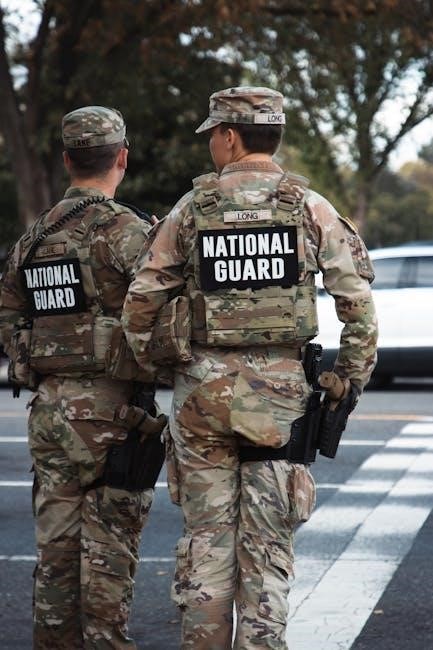
The NCO Creed PDF provides a structured examination of each statement, offering deeper insight into the responsibilities and expectations of Noncommissioned Officers.
Analyzing each phrase fosters understanding and reinforces the core principles of leadership, loyalty, and selfless service within the Army.
“I am a Noncommissioned Officer, a Leader of Soldiers.”
The NCO Creed PDF emphasizes this foundational statement, highlighting the primary role of the NCO as a direct leader responsible for the training, welfare, and discipline of soldiers.
This isn’t merely a title; it’s a commitment to placing the needs of subordinates above personal comfort, demanding consistent mentorship and guidance.
The PDF reinforces that leadership isn’t about rank, but influence – earned through competence, character, and a genuine concern for those being led.
Effective NCOs, as detailed within the document, understand that their soldiers’ success is a direct reflection of their own leadership abilities.
It’s a call to action, demanding proactive engagement and a dedication to developing well-trained, resilient, and motivated teams.
The PDF serves as a constant reminder of this vital responsibility.
“I will discharge my duties faithfully.”
The NCO Creed PDF underscores this pledge as the bedrock of trust between NCOs, their soldiers, and the Army as a whole. Faithfulness extends beyond simply completing tasks; it embodies integrity, honesty, and unwavering dedication to assigned responsibilities.
The PDF illustrates that faithful discharge of duty requires consistent adherence to standards, even when faced with adversity or lacking direct supervision.
It’s a commitment to accountability, owning both successes and failures, and learning from every experience.
This principle, as highlighted in the document, fosters a climate of reliability and predictability within the unit.
Soldiers must be able to depend on their NCOs to uphold their commitments, ensuring mission success and maintaining unit cohesion.
The PDF reinforces that faithfulness is non-negotiable.
“I will have professional knowledge, technical skill, and moral courage.”
The NCO Creed PDF emphasizes this triad as essential for effective leadership. Professional knowledge isn’t merely academic; it’s a continuous pursuit of understanding the Army’s doctrine, tactics, and procedures.
Technical skill demands proficiency in one’s specific MOS, alongside a willingness to learn new technologies and adapt to evolving battlefield requirements.
However, the PDF stresses that these competencies are incomplete without moral courage – the willingness to do what is right, even when it’s difficult or unpopular.
This includes standing up for subordinates, challenging flawed decisions, and upholding the Army Values.
The document serves as a reminder that true leadership requires intellectual competence, practical expertise, and unwavering ethical fortitude.
NCOs must embody all three to earn the trust and respect of their soldiers.
“I will be loyal to those I serve.”
The NCO Creed PDF underscores that loyalty isn’t simply obedience; it’s a deeply ingrained commitment to the well-being of soldiers, peers, and superiors alike. This extends beyond the chain of command to encompass the Army as a whole and the nation it defends.
Loyalty, as defined within the document, necessitates advocating for soldiers’ needs, protecting their rights, and fostering a climate of trust and respect.
It demands unwavering support during both peacetime and combat, and a willingness to share in their hardships and celebrate their successes.
The PDF highlights that a loyal NCO prioritizes the team’s welfare over personal ambition, embodying selfless service.
This principle is foundational to unit cohesion and mission accomplishment, reinforcing the bonds that make the Army effective.
True loyalty, the Creed emphasizes, is earned through consistent action and genuine care.

The NCO Creed and Modern Army Values
The NCO Creed PDF seamlessly aligns with Army ethics, reinforcing values like respect, selfless service, and honor, fostering strong unit cohesion and effective training.
Alignment with Army Ethics
The NCO Creed PDF serves as a cornerstone document, intrinsically linked to the seven core Army values: loyalty, duty, respect, selfless service, honor, integrity, and personal courage.
Each tenet within the Creed directly reflects and reinforces these ethical principles, providing a tangible framework for NCOs to embody and uphold them daily.
Specifically, statements emphasizing faithfulness, professional knowledge, and moral courage resonate deeply with the Army’s commitment to ethical conduct and responsible leadership.
Accessing the NCO Creed PDF isn’t merely about memorization; it’s about internalizing a code of conduct that prioritizes doing what is right, even when it’s difficult.
This alignment ensures NCOs consistently demonstrate integrity and build trust within their formations, strengthening the Army’s overall ethical foundation.
Impact on Unit Cohesion
The NCO Creed PDF profoundly impacts unit cohesion by establishing a shared understanding of leadership expectations and responsibilities amongst Noncommissioned Officers.
When NCOs consistently adhere to the Creed’s principles – taking care of soldiers, setting the example, and accomplishing the mission – it fosters a climate of trust and mutual respect.
This shared commitment strengthens bonds within the team, creating a more unified and effective fighting force.
Regular study and discussion of the NCO Creed PDF reinforces these values, ensuring all NCOs operate from the same ethical and professional baseline.
Ultimately, a cohesive unit, guided by NCOs who embody the Creed, is better prepared to overcome challenges and achieve success in any operational environment.
The Creed as a Training Tool
The NCO Creed PDF serves as an invaluable training tool throughout a Noncommissioned Officer’s career, reinforcing core leadership principles at every stage of development.
Its concise statements provide a framework for discussions during NCO Education System (NCOES) courses, fostering critical thinking about ethical conduct and professional responsibility.
The PDF facilitates scenario-based training, allowing NCOs to apply the Creed’s tenets to real-world challenges and refine their decision-making skills.
Mentorship programs leverage the Creed as a common language for guiding and developing junior leaders, ensuring continuity of values and standards.
Consistent engagement with the Creed, through the PDF and related exercises, cultivates a culture of excellence and prepares NCOs to lead effectively.

Accessing and Utilizing the NCO Creed PDF
Official US Army publications and numerous online resources provide free, downloadable NCO Creed PDFs for convenient study and widespread distribution among soldiers.
Official US Army Publications
The US Army serves as the primary source for the authentic and most current version of the NCO Creed PDF. Accessing it through official channels guarantees accuracy and adherence to established standards.
Army Regulation 600-20, Army Command Policy, often contains the Creed as an appendix or reference material, providing a foundational understanding of its importance within the Army structure.
Furthermore, the NCO Creed is frequently integrated into official training materials utilized within the NCO Education System (NCOES), ensuring consistent dissemination and comprehension across all levels of leadership.
Soldiers can typically find the PDF on the Army Publishing Directorate website, offering a reliable and readily available resource for personal and professional development. Utilizing these official sources is paramount.
Free Downloadable Resources
Numerous websites offer the NCO Creed PDF for free download, providing convenient access for soldiers and those interested in Army leadership principles. However, verifying the source’s credibility is crucial to ensure accuracy.
Websites dedicated to military resources, veteran support, and leadership development frequently host the Creed in various formats, including PDF, allowing for easy printing and distribution.
Printable Study Planner and similar educational platforms often include the Creed as a supplementary material, aiding in memorization and understanding of its core tenets.
While these resources are valuable, always cross-reference with official US Army publications to confirm the PDF’s authenticity and alignment with current Army doctrine. Caution is advised when downloading from unofficial sources.
Printing and Distribution
Once downloaded as a PDF, the NCO Creed is easily printable for personal study, classroom use, or unit distribution. Standard letter-size paper (8.5 x 11 inches) is recommended for optimal readability and professional presentation.
Units often print multiple copies for inclusion in soldier welcome packets, during NCOES courses, or as a constant reminder of leadership expectations. Lamination can enhance durability for frequent handling and display.
Distribution within the ranks should emphasize the Creed’s importance as a guiding principle for all Noncommissioned Officers. Encouraging soldiers to carry a copy serves as a daily commitment to its values.
Ensure printed materials are clear, legible, and accurately reflect the official wording of the NCO Creed, reinforcing its significance and promoting a unified understanding of leadership responsibilities.
The NCO Creed in Leadership Development
The NCO Creed PDF serves as a cornerstone within NCOES, fostering mentorship and practical application of its principles in diverse, real-world leadership scenarios.
NCO Education System (NCOES)
The NCO Creed PDF is intrinsically woven into the fabric of the Noncommissioned Officer Education System (NCOES) at every level of progression.
From the Basic Leader Course to the Sergeant Major Course, Soldiers are repeatedly exposed to, and evaluated on, their understanding and internalization of the Creed’s tenets.
The PDF format allows for convenient study and reference, reinforcing the core values and expectations of NCO leadership.
Instructors utilize the Creed as a foundational document, prompting discussions on ethical dilemmas, leadership challenges, and the responsibilities inherent in the NCO Corps.
Furthermore, successful completion of NCOES milestones often requires recitation and practical demonstration of the Creed’s principles, solidifying its importance in professional development.
It’s a constant reminder of the standards to which all NCOs are held.
Mentorship and the Creed
The NCO Creed PDF serves as a powerful tool within the crucial dynamic of mentorship, bridging experience and guidance for developing leaders.
Seasoned NCOs utilize the Creed as a focal point for discussions with mentees, dissecting each statement to explore its practical application in real-world scenarios.
Sharing the PDF encourages self-study and reflection, prompting mentees to internalize the values and responsibilities outlined within.
Mentors can leverage the Creed to facilitate conversations about ethical decision-making, leadership styles, and the importance of selfless service.
By consistently referencing the Creed, mentors reinforce its enduring relevance and cultivate a shared understanding of the NCO Corps’ standards.
It fosters a culture of continuous learning and professional growth, strengthening the bonds of mentorship.
Applying the Creed in Real-World Scenarios
The NCO Creed PDF isn’t merely a document for memorization; it’s a practical guide for navigating the complexities of leadership in dynamic environments.
During challenging missions, referencing the Creed reinforces commitment to duty, loyalty to soldiers, and unwavering moral courage.
When faced with ethical dilemmas, the Creed’s principles provide a framework for sound decision-making, prioritizing integrity and selfless service.
Leaders utilize the Creed to inspire their teams, fostering a shared sense of purpose and accountability.
The PDF serves as a constant reminder of the responsibilities inherent in the NCO Corps, promoting professionalism and dedication.
It’s a tool for self-assessment, encouraging continuous improvement and a commitment to embodying the values it represents.

Variations and Interpretations of the Creed
The NCO Creed PDF remains consistent in core tenets, yet branches may emphasize specific applications, while international equivalents reflect unique military cultures and traditions.
Different Branch Specific Applications
Utilizing the NCO Creed PDF, each branch tailors its leadership focus, though the foundational principles endure. For instance, the Infantry emphasizes aggressive patrolling and close combat leadership, reflected in practical application scenarios within the PDF’s study guides.
Armor NCOs concentrate on tactical movement and combined arms integration, requiring a nuanced understanding of the Creed’s responsibility aspects. Aviation NCOs prioritize safety and precision, demanding technical skill and moral courage as highlighted in the PDF’s detailed breakdown.
Medical NCOs focus on compassionate care and ethical conduct, reinforcing the Creed’s loyalty component. Regardless of branch, the NCO Creed PDF serves as a common leadership language, fostering cohesion and shared understanding across the Army.
International Equivalents
Examining the NCO Creed PDF reveals universal leadership themes resonating globally. Many nations possess similar professional declarations for their enlisted leaders, emphasizing duty, honor, and selfless service. The British Army’s Warrant Officers’ and Senior NCOs’ Code, for example, shares parallels with the American Creed’s focus on leading soldiers and upholding standards.
The French Sous-Officiers adhere to a code of conduct prioritizing discipline and technical expertise, mirroring aspects detailed within the NCO Creed PDF. German Feldwebel emphasize responsibility and mentorship, aligning with the Creed’s commitment to soldier welfare.
While specific wording varies, the core tenets of integrity, competence, and dedication to subordinates are consistently present, demonstrating the universal importance of strong NCO leadership worldwide.
The Creed’s Enduring Relevance
The NCO Creed PDF remains profoundly relevant in the 21st-century Army, serving as a bedrock for professional development and ethical conduct. Despite evolving technologies and complex operational environments, the Creed’s core principles – leadership, responsibility, and selfless service – remain timeless.
Its continued use in NCOES and mentorship programs ensures each generation understands and internalizes these values. The Creed isn’t merely a historical document; it’s a living guide for navigating the challenges of modern warfare and maintaining unit cohesion.
Regular study of the NCO Creed PDF reinforces the vital role NCOs play in bridging the gap between officers and enlisted personnel, fostering trust and achieving mission success.